Limits
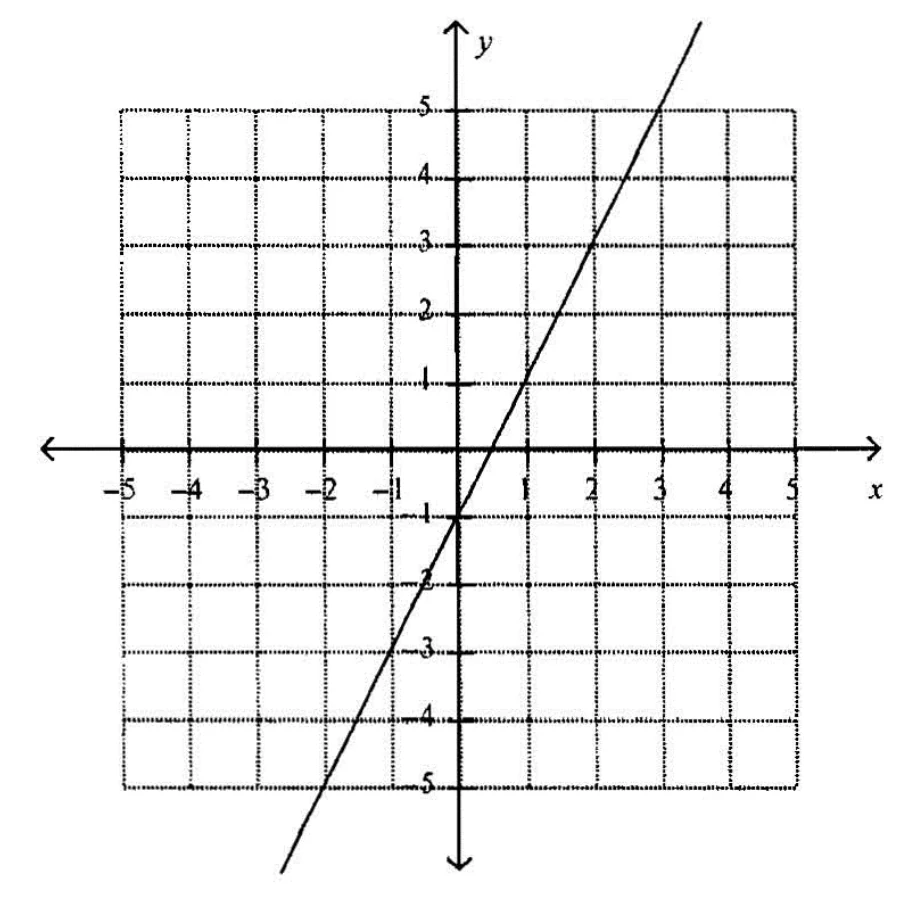
Determine .
Grade 12 · MCV4U · Calculus and Vectors · Available Now
MCV4U (Grade 12 Calculus and Vectors) is live on Martian Lab: 8 units of interactive lessons and 130 practice tests built from real Ontario tests. Unit reviews walk you through every concept with detailed, simple explanations before you attempt any practice tests.
Get started8 real questions, one from each unit, straight from the free tests on Martian Lab. Try each one on paper first, then open the answer and mark yourself.
Limits
Derivatives
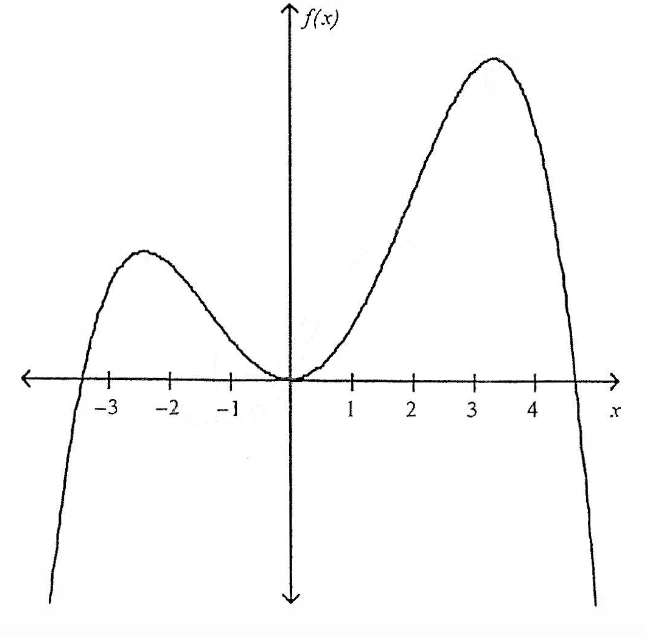
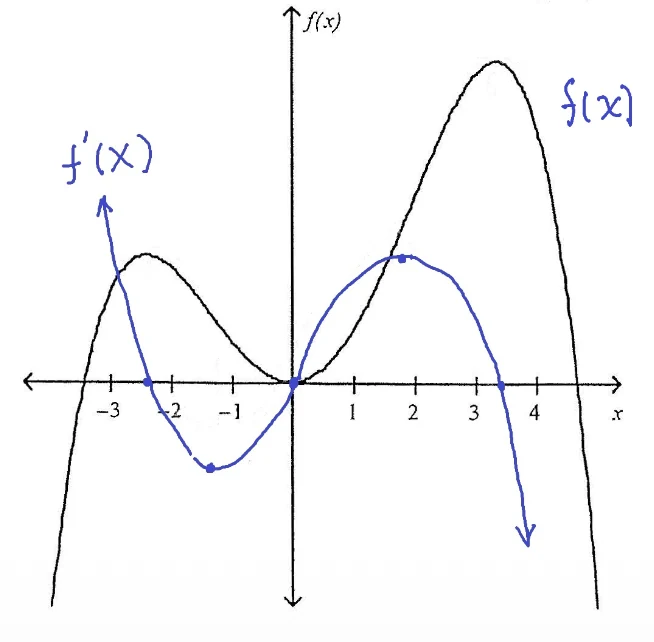
Curve Sketching
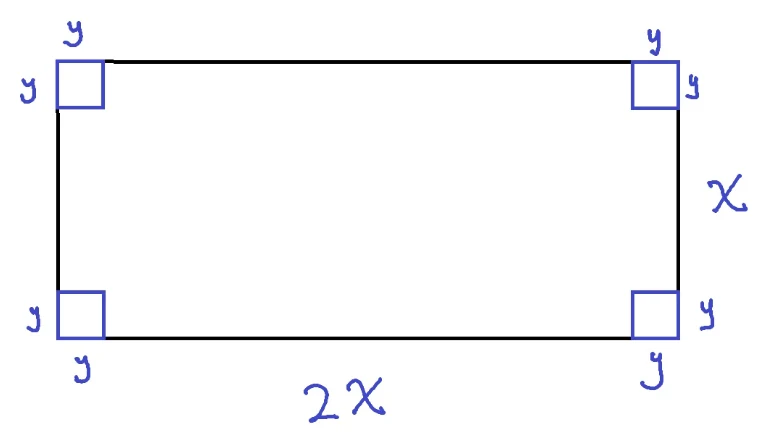
Optimization
Derivatives of Trig, Exp and Log
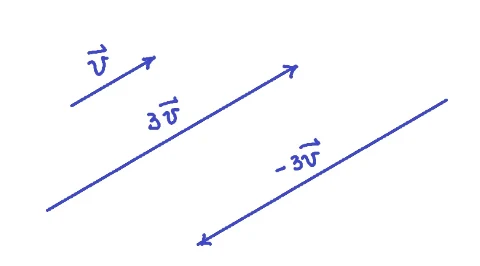
Geometric Vectors
Cartesian Vectors
Lines and Planes
MCV4U is the Ontario course code for Grade 12 Calculus and Vectors. The M is for mathematics, the 4 for Grade 12 and the U for university preparation. The curriculum writes it for students headed for careers in science, engineering, economics or some areas of business, and anyone who will take university calculus, linear algebra or physics.
The curriculum sets 3 strands. Martian Lab teaches them in 8 units:
Grade 12 Advanced Functions (MHF4U). The curriculum says it must come before MCV4U or at the same time, so the two can share a semester.
University programs in engineering, computer science, math and the physical sciences, where it is often a required course, and the calculus, linear algebra and physics you take in first year.
Your class tests MCV4U one unit at a time, so Martian Lab does too: each unit has its own lessons, then its own practice tests. The unit list below is in the order you meet them in the app.
Sources, read November 5, 2026: The Ontario Curriculum, Grades 11 and 12: Mathematics (revised 2007).
MCV4U (Calculus and Vectors) runs in two halves. First five units of calculus, then three of vectors:
What a limit is, evaluating limits algebraically and from a graph, one-sided limits, and continuity.
The derivative as a rate of change and as the slope of a tangent. First principles, then the power, product, quotient, and chain rules.
Using the first and second derivatives to find intervals of increase and decrease, maximum and minimum points, concavity, points of inflection, and asymptotes, then putting them together into a graph.
Building a model from a word problem, finding the maximum or minimum on an interval, and related rates.
Derivatives of sine, cosine, and tangent, of exponential functions, and of logarithms, and combining them with the product, quotient, and chain rules.
Vectors as magnitude and direction. Adding and subtracting them, scalar multiples, and resolving forces and velocities into components.
Vectors in component form in two and three dimensions, the dot product and the cross product, projections, and the angle between two vectors.
Vector, parametric, symmetric, and scalar equations of lines and planes, and finding where they intersect.
How the units map to the curriculum, the order they are taught in and how to find your unit 1 test: MCV4U units explained.
What each lesson in every unit covers: MCV4U lessons, unit by unit.
Three free review pages, no account needed.
Calculus and Vectors is required for most university programs in engineering, computer science, physical sciences, and mathematics. Many Ontario universities use MCV4U as a prerequisite or strongly recommended course for competitive STEM admissions. The calculus portion introduces concepts you'll use throughout university, and the vectors portion is foundational for physics and engineering. Strong preparation in MCV4U gives you a significant advantage in first-year university math courses.
Yes. The sample test on this page has a real question from every unit, answers included. A free account adds the first test in every unit: five questions each, one try per test.
MCV4U is the Ontario course code for Grade 12 Calculus and Vectors. The M is for mathematics, the 4 for Grade 12 and the U for university preparation. The curriculum writes it for students headed for careers in science, engineering, economics or some areas of business, and anyone who will take university calculus, linear algebra or physics.
Grade 12 Advanced Functions (MHF4U). The curriculum says it must come before MCV4U or at the same time, so the two can share a semester.
8 units, calculus first and vectors second: Limits, Derivatives, Curve Sketching, Optimization, Derivatives of Trig, Exp and Log, Geometric Vectors, Cartesian Vectors, Lines and Planes.
130 practice tests across the 8 units, built from real Ontario tests. Each unit has its own set, so you can drill the one your next test is on.
Yes. Geometric Vectors, Cartesian Vectors, and Lines and Planes each get their own lessons and tests, including dot and cross products and the intersections of lines and planes.
Start with Limits. Its lessons go from rates of change to limits at infinity, and everything after it, derivatives included, leans on that unit.
No. A free account gets every lesson plus the first test in each unit. The rest of the tests come with a paid plan, and the pricing page has the options.
No credit card required to start.
Get startedAlso available: MCR3U (Grade 11 Functions), MHF4U (Grade 12 Advanced Functions) and IB (Grade 12 IB Math).